

Asperger’s Syndrome (part 1)
I recently had an opportunity to meet with a school staff regarding a young boy who is having a tough time. He is doing OK academically but his “odd” social skills result in him being bullied and manipulated by his classmates. He becomes angry and lashes out and problems snowball from there.
I am not a doctor but as the teachers described this boy’s behaviour, I became suspicious that he may have disorder called Asperger’s Syndrome. My recommedation was that it would be advisable to suggest to the boy’s parents to have a qualified medical doctor assess the boy. If in fact he does have Aspergers then the school and the parents need to address this boys problems differently than they have been doing.
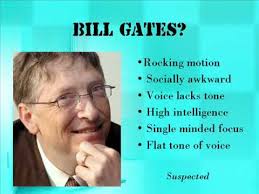
Below is an incomplete list of characteristics commonly seen in individuals with Aspergers:
- average to above average intelligence
- perceived by others as being “odd”, “eccentric”
- socially naive
- often taken advantage of, rejected, bullied
- unaware of other’s thoughts, feelings or perceptions resulting in appearing rude or inconsiderate
- difficulty in initiating and maintaining close relationships & friends despite desiring to do so
- problems reading non verbal or social cues and understanding social rules
- inappropriate or insensitive social behaviours
- will play with others but “on his/her terms” or not at all
- literal interpretation of communication from others – eg. “I have a splitting headache”
- speech is used primarily for delivering information or requesting something (not as a way of interacting socially)
- inability to small talk – one sided conversations
- long winded about his favourite topic
- may sound like a little professor
- uses repetitive phrases
- detail oriented – may miss the big picture
- superior ability to focus on favoured areas of interest
- exaggerated emotional response to situations (eg. temper tantrums, crying)
- hyper sensitive to sensory input (sound, light, smell, touch, taste)
- difficulty “connecting the dots” of life
- rigid, inflexible and rule bound behaviours
- often anxious and/or depressed
- poor organizational skills
- clumsy or awkward motor skills
- dyslexia, writing problems
My next post will present info regarding diagnosis, treatment and what parents can do.